Where ECU Repair Is Supporting Vehicle Availability
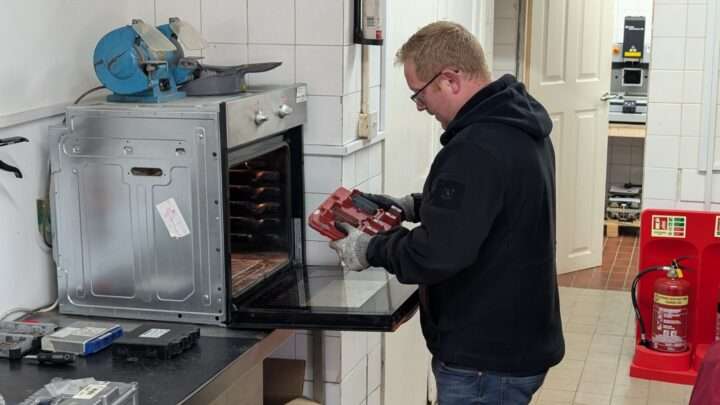
We are currently seeing consistent demand across several ECU types where repair is proving to be a practical alternative to replacement.
Mercedes CPC3 ECU Repair
The Mercedes CPC3 continues to appear regularly, particularly where faults relate to the FPGA area and internal board issues.
With repeat work, repair processes are becoming more consistent, allowing these units to be returned to service without extended delays.
Find out more about our Mercedes CPC3 ECU repair service.
Scania Engine ECU (EDC) Repair
Scania engine ECUs remain a key area where repair can support fleets, particularly where replacement units are not immediately available.
Where diagnostics are clear, repair provides a viable route to avoid extended vehicle downtime.
Learn more about our Scania engine ECU repair service.
Wabco EBS ECU Repair
Wabco EBS units continue to move through the workshop with consistent success rates depending on the nature of the fault.
In many cases, these represent a straightforward and cost-effective repair option compared to sourcing replacement units.
View our Wabco EBS ECU repair service.
Beyond ECUs – Wider Electronics Repair Demand
Alongside ECU work, we continue to support a range of other commercial vehicle electronics repairs.
This includes:
- Instrument cluster repairs where displays or warning systems fail
- Wiring loom repairs where replacement is not practical
- Gear selectors and transmission electronics
We are also seeing increased demand in crane and plant equipment electronics.
Crane and Plant Electronics Repairs
Atlas switch control units and Scanreco remote controls are becoming more common, particularly where replacement parts are delayed or difficult to source.
Explore our Atlas switch control unit repair service and Scanreco remote control repair service.
Turnaround and Workshop Approach
For most units, turnaround is typically three working days or better, subject to parts availability and fault type.
The focus is straightforward:
- Confirm the fault
- Complete the repair
- Return the unit to service
Where a unit is not viable, this is confirmed early.
When Repair Becomes the Right Decision
For many fleets and workshops, repair is not always the first option.
However, it becomes the right decision when:
- Lead times for replacement parts extend
- Vehicles begin to queue in workshops
- Costs of replacement increase
We are seeing more businesses choosing repair earlier in this process.
Supply Chains, Uncertainty and the Role of Repair
Over recent years, most operators have experienced the impact of supply chain disruption.
Parts availability can change quickly. Lead times can extend without warning. Vehicles can remain off the road longer than planned.
With ongoing global uncertainty, including conflict, trade pressure and manufacturing constraints, it is difficult to see these risks reducing in the short term.
What we are likely to see is:
- Continued pressure on parts availability
- Longer lead times for certain electronic components
- Greater reliance on existing vehicle assets
Repair and remanufacturing are becoming part of day-to-day maintenance strategy.
In most cases, the issue is no longer whether a unit can be repaired. It is whether that decision is made early enough to avoid unnecessary downtime.
MD Perspective – Jon Ellard
Over the last few years, most fleets and workshops have already experienced what happens when supply chains tighten.
Parts become harder to source.
Lead times extend.
Vehicles sit longer than they should.
From what we are seeing, it is difficult to assume those conditions will fully stabilise in the near term.
Operators will need to rely more on the assets they already have.
Workshops will need more options when parts are delayed.
Decisions around repair will need to be made earlier.
Repair and remanufacturing are becoming part of normal maintenance strategy.
Not instead of new parts, but alongside them.
The businesses that recognise that early tend to experience less disruption when supply tightens again.
Jon Ellard – LinkedIn
Conclusion
As pressure builds across supply chains and vehicle availability becomes more critical, repair is playing a more visible role in keeping fleets moving.
If you have units currently waiting on a decision, or vehicles off the road due to ECU faults, repair may provide a practical route back into service.